Thursday, 17 February 2011

Evaluation - Q7

Looking back on your preliminary task, what do you feel you have learnt in the progression from it to the full product?
In the process of the preliminary task to our final product, it is clear to see that improvement has happened. However, the preliminary task helped us to avoid certain mistakes that are common and ensure all of the class of gaining a good mark. Continuity was a popular mistake that can arise as small detail on costumes can be different to when they were shooting the day before even though it is for the same scene.

Research
There were very little research for the preliminary task. There were a lot more teacher input rather than personal research as the course was reasonably new to us all and so each of us had to gain an understanding of the unit. When we started the main task there was very little teacher input as we were left to research different suggested media texts and gain some inspiration and ideas.

Planning
For our preliminary task we formed a storyboard, aswell with the location set and devised our own script. This was also done in our main task. However, there were much more planning involved in the main task as in the preliminary task, as the location was provided for us. Other planning which we had to encounter for the main task but not the preliminary task were a choosen non-diegetic background music which has to fit in with the narrative and create the mood. Another would be choosing the actors which you would aim to choose someone whom has acting experience and looks like the character I have made.

Construction 
There were only a certain amount of camera shots that needed to be achieved for the preliminary task and so there weren't many takes for certain shots. However, the opening film was much more complex and more filming was done leaving lots of shots having to be re-done. There was also a lot more independance in the main task as in the preliminary task we were all provided with a lot more teacher support in composition of the different shots. Music wasn't needed in the first task also which meant that we didn't have to find the right track or edit it to enable a certain sound appearing at a certain time.

Evaluation
We write in depth too much about our preliminary evaluation as the task was there for us all to gain experience and knowledge about filming. During our main task it required a much more evaluation. We created a evaluation questionnaire which was completed by others to see what they thought about our final piece. Here is a image of what our evaluation questionnaire looked like:


Questionnaire Evaluation
How Many people we asked were male or female.


What percentage of age the people were.


How important do you think the special effects are?

72% of people we asked thought the special effects were important.

How important to you do you think music is in creating the mood.

86% of people thought music was very important to creating the mood.

How important do you think titles are for a opening sequence.

61% of people that we asked think that the titles of an opening sequence are important.

To summarise the people we asked in our target audience thought that music was one of the most important things in a opening sequence, but surprisingly titles are not as important from there view.


By looking at the wordle images containing all of the words typed in question six, it makes clear that preliminary and task are the two most used word. This is good as this section is contrasting with the premilinary task and the main task.


Here is the video of our completed coursework:

Tuesday, 15 February 2011

Evaluation - Q6

What have you learnt about technologies from the process of constructing this product?

Research
By using the web, we researched different existing texts before we started producing our opening film. We used various sites to do research with, the main two were:

We used "youtube" to look at existing film titles sequences to gain inspiration and creativity which may contribute to our films. "Freeplaymusic" was the website that the majority of the class used as background music as it is copyright clear music which enabled us to type in a "keyword" and plenty of music would show in relation to that word.

The film was loacted around the school because that is where bullying is popularly performed. This enabled me easy access of taking photos of different settings around the school for where filming would take place. Some of the images I took I didn't use as I felt there were better loactions. Here are some of the photos:


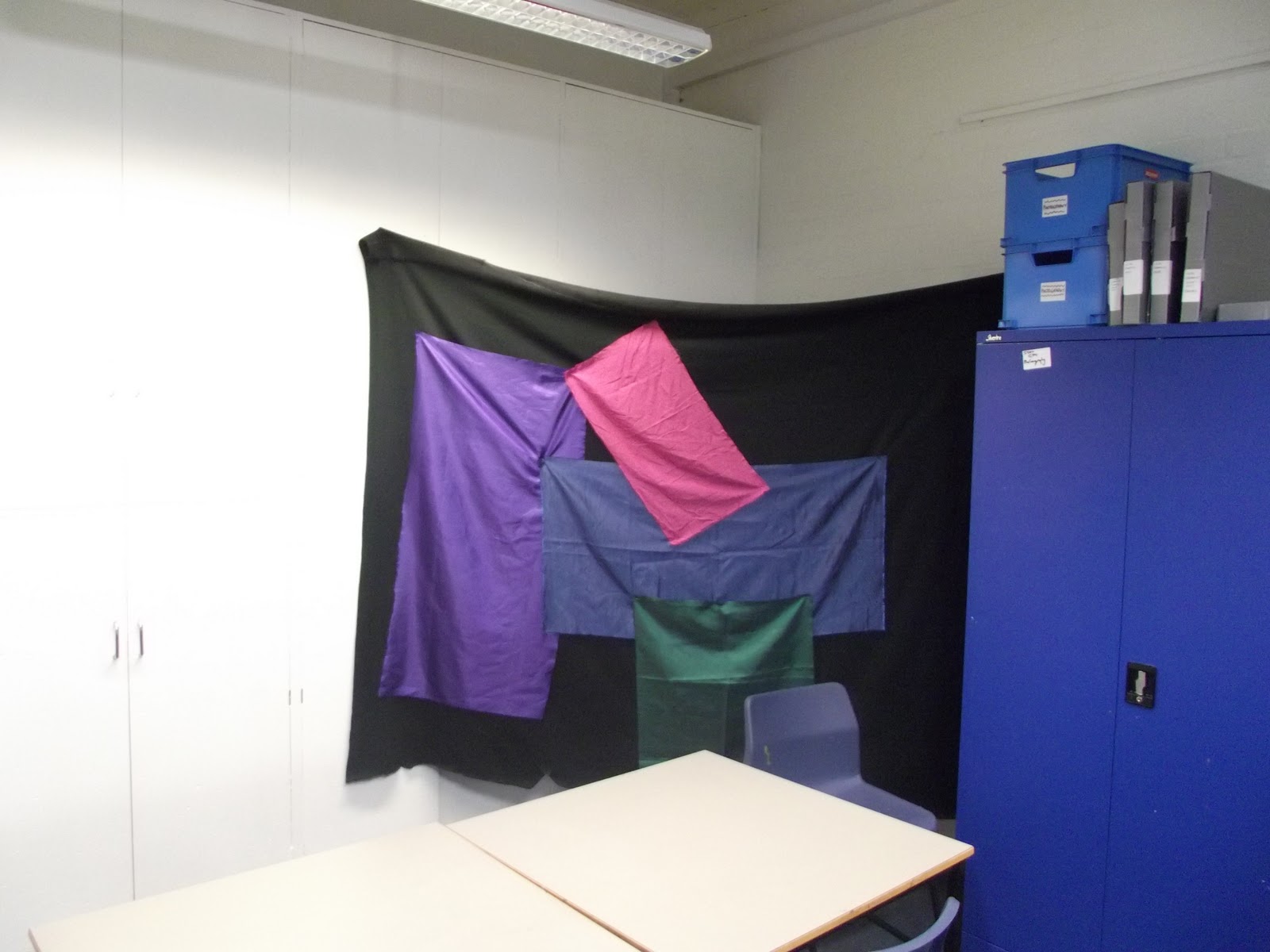
    This is one of the locations where "Jess Hunter" was older and her powers were revealed. We decided that having a black back drop on the contrast of her would enhance and bring more attention onto her.


    At the beginning "Jess" is walking and so having the location outside of the school meant that it was easy for the actor and us to get there. There were also a lay-by and so it was safe and easier for us to film on the lay-by whilst the camera is panning the actress.


    Although we didn't use this room in the end, this was the typical room with a seat that we could sit "Jess" on allowing people passing quickly conveying bur motion emphasising her loneliness.


    Planning
    Mobile phones were important for me and my partner as it helped us communicate outside of school when arranging different things such as, remembering to bring in the storyboard when filming etc. The digital still camera that we used to take photos of certain locations was useful as it helped us track the certain places around our school that we thought was best to film in. The video camera itself was useful in the fact that I could retrace the footage we had produced which enabled me to tell our actor (and in the end me) where to stand for the next take and so forth. Obviously this had to be done due to continuity.

    We also created a storyboard which gave us a clear understanding of the narritive of the play. However, something that I have learned in the process of this coursework is that you never completely stick to the storyboard which you created at the very beginning. I found that we have had better ideas once continuing with the coursework. I also learnt that happens in everyones storyboard when planning whether you are ameteur or professional.


    Construction
    The video camera that we worked with was specifically called the Panasonic NVGs 500 mini-DV video camera which we then uploaded the footage onto the iMac. Within the iMac were programmes Premiere Pro and Photoshop. Adobe Premier Pro is a software were you edit the film and essentially pick all the shots and put them together ending with the finished piece. Adobe Photoshop is a software slightly similar to Microsoft Paint. This programme was used for us producing the titles and then pacing them into Premier Pro where they come together. Another programme which we inhibited unlike everyone else was called ParticleIllusion 3.0 which enables you to create manipulation of moving images. This is what we used for our ball of fire and the fire at the beginning displaying our distribution company. Lastly, Blogger was/is evidently used to record all of our construction activity.

    This video camera was the same model that we captured our opening film sequence with.


    <-- An image of the software, Adobe Premier Pro. All of the footage you have produced is in the bin on the left, top hand side. You are able to drag the footage you chose by looking at it on the first screen (on the left) and place it on the time line across the bottom. The second screen enables you to look at the variety of shots together. This is a print screen of my video when I was in the process of editing.


    Evaluation
    I have created a DVD which I showed for a sample of my target audience (teenagers). This was reasonably easy for me to ask a selection of people to view the screening as I am a teenager myself and so my peers would fit my target audience. Because of the viewing, this meant that the use of data projector was used to show the audience. The use of Microsoft Word was achieved to create evaluation questionnaires which the target audience used to provide feedback for us. Finally, Blogger was used to allow me to record all of my evaluation activity.

    At the beginning of this unit, we were given a blank disc which in the end had my final peice on which was a film opening consisting of full colour, a variety of camera shots, a set of locations and fully directed, produced and edited. This was all created through the technologies which I spoke about in construction.

    Monday, 14 February 2011

    Evaluation - Q5

    How did you attract/address your audience?
    We constructed a research questionnaire to enable us to understand whether members of the public find different key elements in openings of films important or not. Our three main questions which we asked were:
    • How important do you think special effects are?
    • How important do you think music is in creating the mood?
    • How important do you think the opening titles are?
    With 1 as being a priority and 10 as the last thing to think about.
    Music was the highest number overall so therefore we wanted our music to be one of our key priorities. however, if we could change our incidental music then that would be the first thing i would want to improve on as I felt that the music could have fitted in with the mood of mystery which is what our film conveys.

    This shows you the gender and age number. The pie chart below shows that all of the audience were in their teens which is what we were hoping as our target audience was in the teenager age range.


    We classified our film as a "PG" as "a 'PG' film should no disturb a child aged around eight or older" quoted from the BBFC guidelines. This fitted what the content of our film was.

    Monday, 7 February 2011

    Evaluation - Q4

    Who would be the audience for your media product?

    The BBFC have the responsibility of classifying all cinema released films, all DVD/BluRay discs and disc content released in the UK. The guidelines are created through the public as they consultated what content should go under 18, PG etc. They have a book explaining the guidelines which the public created, this allows them to check the different catorgries and see whether they suit the narrative which has happened in the film. It has to operate under certain acts of parliment. The 1984 Video Recordings Act is one which gave the BBFC the duty to regulate video and disc content. The 2003 Licensing Act gave the local authorities the responsibility to license cinemas.

    Here are the guidelines explaining the content of each one:

    "U"niversal – Suitable for all

    It is hard to predict what children may find sensitive. This classification is suitable for the ages of four and over to watch without parental permission. Show reassuring counterbalances towards threat, violence and horror. 


    "P"arental "G"uidence


    You are able to watch this classification at any age and is suitable towards the ages of eight and older. Although, parents are advised to observe as children may be sensitive on some of the mild references such as sex, drugs and discrimination etc. This is the classification that we chose for our film, as it fits bests with the BBFC's guidleines.


    12A/12 

    Where material is suitable for ages 12 and older for the 12 classification and 12A is when accompanied by an adult. This informs parents that scenes may not be recommended for children. However, parents are allowed to judge their children if they would be suitable for watching the film whether under 12 or not. 

    15 

    Stronger references to each of the section the BBFC look for. Discrimination may be shown but should not endorse discriminatory language or behaviour. The worst language that would be acceptable would be such as c**t and f**k.. 15 is allowing to convey distressing content but cannot dwell on the detail that it may be copied.

    18

    This classification is only welcome for adults entertainment. Material of an 18 classification can be on the brink of the criminal law. Material can influence peoples behaviour and more explicit sexual images which cannot be justified by the context.

    R18

    R18 can only be shown from licensed cinemas and licensed sex shops. the content of R18 would include: sexually abussive activity (rape, incest and paedophilia), pain caused through sexual activity, penetration by any objects or physical harm and sexual threats, humiliation and abuse.


    This is the typical target audience member that we and my working partner were looking for:                                                                                                           

    For our film "Rejected", the type of target audience that would appeal to the genre of the film would be a boy or girl. The age range would be any ages as it targets a family film as our classifaction is a PG. The image I have uploaded is a typical audience member, his age is 16 and the genre of films he enjoys to watch are mainly action and comedy. His favourite films are, "Saving Private Ryan" and "Kick ass", starring Aaron Johnson who is one of his favourite actors. Hobbies that he enjoys doing at the weekends are skiing at a local centre and football, drama and rugby. He also likes playing on his x-box and watching television programmes including, mock the week and top gear.


    Sunday, 6 February 2011

    Evaluation - Q3

    What kind of media institution might distribute your media product and why?


    There are two different ways of distributing films. The first way would be when you recieve distribution through one of the country's main distrubution organisations. The film would have to be a mainstream feasture film in order for this way to happen. The distribution films come under the umbrella of the film distributors' association the FDA. The companies include world wide distributors such as Warner Brothers, Sony Pictures, Fox and Icon Movies etc..A quote from the FDA guide reveals that their job is "the highly competitive business of launching and sustaining films in the market place".


    They are the people arrange publicity for the promotion of the film which may inclue things such as posters, billboards, trailers and chat shows. They also arrange the print disribution to all cinemas ensuring a simultaneous opening weekend. Arranging all other distributions of the film e.g. video stream, free-to-air, hotel and arranging the film premier.

    The other way would be using Web 2.0 a user generated content where people upload videos, such as, the website youtube. This is typically used for student production which has a low budget and created by amateur film makers. Evidently, this is the distribution company which I used as you pay no money and don't need the BBFC to classify the film for a nationwide audience to see.

       This is a video that someone has edited together and using web 2.0 as their distributor. However, this way can show to be a success as this viedo has recieved 11,421,236 hits.

    Evaluation - Q2

    How does your media product represent particular social groups?

    For our social group we choose teenagers. The reason for this is because bullying is popularly achieved in secondary schools when the majority of pupils are teenagers. This means that there is a contrast between the  powerful and dominating people who are the bullies and a victim. It is clear why Jess is being bullied and although people don't have magic powers in real life, bullying is done all over the world and so picking a topic that can reflect on so many people is what we wanted to do.

    Here is a scene from "Matilda" where the bullying happens at school (in relation to our opening film sequence):


    This is a scene where "Jess" is being bullied in our coursework:


    Friday, 21 January 2011

    Evaluation - Q1

    In what ways does your media product use, develop or challenge forms and conventions of real media products?

    In our study of film openings, we were able to research different openings of films to get an understanding of how we can put together our work.

    When we were researching a range of films openings, it was clear to me that they all had opening title sequences. The main information that the audience could see were, the name of the title, director, producer, main stars, production company and distribution company. An example of this would be the musical "Grease" which includes all of the jobs which are stated above.


    For the introduction of mise-en-scene, I wanted to make clear of the where? when? who? elements so the audience can make clear of the narrative. The where element was in a school, we conveyed this by having the main character being bullied and locations of corridors which relate to a school. The when element is shown through two people. The film revealed that Jess (the leading role) was thirteen through voice over and then showed her at the end being a different person as she was older. This gives you a brief idea of when this was set; which I hope is in the present because I wanted the film to be current. The who element is reasonably easy because our opening film is emphasised on just the one person. This is done by the camera always focusing on her and the audience start to grasp an understanding of who she is through the voice over.

    When researching different films, there was one film which I particularly thought showed clear mise-en-scene. It's set in America which we establish through dialogue, in a high class suburb which you understand due to the houses. There is a close-up of a poster showing a Halloween party which covers the when element and for the who, you are introduced to a strange character (because we first meet him sat in the road next to a sharp corner), which we follow through the beginning of the film so you know he is the main character. His name also being the title of the film contributes to this; "Donnie Darko".


    In "Cold Mountain" which was one of the films we researched, we were introduced to two main characters with one not being visable. The film started with a woman on a voice over so you then know that she has an important role. We are then lead to a man in the world war (as he is in a trench) , who is looking at a photo of a woman and without no one actually saying the evident, you know that the woman and man are in a relationship.


    We only have one character that is the focus, therefore the audience understand the identification of her having special powers which they can follow through the development of the narrative. The early awareness of the antagonists are distinguished which allows the audience quick views of realising who the good and bad people are.

    This provides us with early relationships in "Rejected" (our opening film) and "Cold Mountain" from what I have said above. It is important to identify the relationships between different characters at the beginning of films because you can follow with less confusion. This may apply more towards higher classification films because they have a more profound meaning and cause more confusion. However, with this you could argue that once you are getting older, you should realise and understand the meaning and story lines of the film.

    In "Six Feet Under", the music is a brilliant example of creating mood for the audience. Through the music, the audience can expect "Six Feet Under" to be mysterious as the music is slow and has a strong beat to keep you alert and interested. The music has to contribute to the whole film along with the text on screeen that you see at the beginning. With the moving images of death and the hands parting at the very beginning conveying the thought of death once more, the music has to relate to this which is successfully achieved in "Six Feet Under".


    In "rejected" our music has a relaxed element and also mysterious indication for the audience to hear. The audience are following Jess to a cluimax where we find out why she is bullied and acting isolated. Because the audience wouldn't find out until the end, it was a mysterious mood we wanted. Therefore, I think the music should have a less relaxed element to allow the audience to only keep this feeling of what is going to happen.

    Friday, 7 January 2011

    Music Issues

    At the beginning of our video, we had different shots outside which implemented the different sounds that was on the shots one after another. We turned the audio down at different times, when, for instance, a car would drive by creating a lot of noise. This made a huge difference as it made the music smooth together and flow nicely onto the next frame.

    We added the background music on at the end because we needed to know the timing of the video before putting the music on. The music at the beginning didn't match with the feeling of the film, with the feeling being as a mystery and the music slightly too jolly. George put the music together on a software he has at home called "Apple Garageband". After the mutual feeling of the music being too jolly, we decided it would be a wise idea for George to change the beginning in an attempt to match the mood and feeling; mystery. We both thought that this was succeeded when we had completed our peice.

    Heres an illustration of what Garageband looks like:

    Wednesday, 5 January 2011

    Reliability

    Having casted our leading role, we found out in a short period of time that she wasn't the best for realiability which was slightly hard to believe as I cast her due to the fact she does Theatre Studies at A-Level and therefore assumed she would be experienced and be more passionate in performing the role when she said she would happily play the part. With time becoming of the essence, I decided to take her part leaving us to quickly film the 10 seconds of footage which was with her. It worked out a lot more sufficient for us as my role was the director so I had ideas of what I thought would look good, which I could bring to the film.

    Wednesday, 8 December 2010

    Weather Conditions

     Due to the weather, we have been unable to film because the conditions are too cold for the camera as condensation forms inheriting it to break. Temperatures reached up to -16c around our region and having two feet of snow in the locations we wanted to film in.
    This is an image showing the depth of the snow, which makes it clear of the difficulty we encountered.
    The snow came up to two feet around the school and so not only with the school being shut, making it harder to contact George, my working partner on the film and the actual filming itself! It took along time for the snow to start to clear. This meant that once back at school, we would be filming with snow when having filmed before, there was no snow and so continuity was important else it would be clear that we filmed on seperate days and wouldn't convey any realism. The filming that we had done was at the beginning of the opening and it was about 20 seconds footage which I knew we could film again having decided that the snow wouldn't go for at least a few weeks due to the snow fall and low temperatures. Because of this, we were able to film all our outside shots in the snow.


    Thursday, 25 November 2010

    Typical Target Audience Member


    For our film "Rejected", the type of target audience that would appeal to the genre of the film would be a boy or girl. The age range would be any ages as it targets a family film as our classifaction is a PG. The image I have uploaded is a typical audience member, his age is 16 and the genre of films he enjoys to watch are mainly action and comedy. His favourite films are, "Saving Private Ryan" and "Kick ass", starring Aaron Johnson who is one of his favourite actors. Hobbies that he enjoys doing at the weekends are skiing at a local centre and football, drama and rugby. He also likes playing on his x-box and watching television programmes including, mock the week and top gear.

    Target Audience Questionnaire Evaluation

    Target Audience Questionnaire Evaluation 


    How important do you think the special effects are?

    72% of people we asked thought the special effects were important.

    How important to you do you think music is in creating the mood?

    86% of people thought music was very important to creating the mood.

    How important do you think titles are for a opening sequence?

    61% of people that we asked think that the titles of an opening sequence are important.

    Having seen the statistics, it is important that we have music as our audience have stated it to be the key importance out of all three. 

    Target Audience Questionnaire

    Target Audience Questionnaire 

    Tick
                                                                             M          F
    Your Gender

                                                                          11-13   14-16   17-21
    Your Age 

    Circle
    Favourite Genre of film                            Action Comedy  Thriller                                                                                                                                                               
                                               
                                                                           Rom-Com Horror  Something Else


    Scale. 1- Priority to 10- Last thing to think about.

    How important do you think are special effects?
    ……….....................................................................................................................
    ..................................................................................... 

    How important to you think music is, in creating the mood?
    ……….....................................................................................................................
    ..................................................................................... 

    How important do you think the titles are?
    ……….....................................................................................................................
    ..................................................................................... 

    Tuesday, 23 November 2010

    Locations of Filming

    We took photos of the locations where we want to film. We chose this setting because it's just outside our school and so it was easy for me and my partner and our actors to locate. We said at the beginning that we wanted "Jess" to walk down a path, and this path has a lay-by which enables us to film without the danger of traffic.


    For one of our scenes, we thought it would be a sensible idea to have a black, plain background in order to take away any distraction from the actor. There were two backgrounds in which we could use. The first one has coloured patches on which can be taken of to have just a black sheet. However, we decided to choose the second background as it was a lot bigger and so therefore it would be more reliable.


    For one shot, “Jess” is sat on the back right table with the left chair. She is sat still whilst people are walking past her taking no notice, this emphasises her being lonely and by herself through-out her school life. 

    The next images are the different locations where we would like to films flashbacks that happen to "Jess" when people physically and mentally hurt her e.g. Hit her, laugh at her etc. Having the flashbacks being repeated creates effect and shows that "Jess" goes through the bullying daily. Making the different shots quicker and quicker will then build up to a climax of the title saying, Rejection".


    Thursday, 18 November 2010

    Security of Names

    For the lead character, we have her name spoken on voiceover, which meant we had to think of a sensible name. I told George how I liked the name "Jess Huntly", however after some discussion, we thought that the surname sounded more upper class rather than middle which is what we wanted. "Jess Hunter" however, sounds like a  middle class, common name, but also the surname "Hunter", brings something myseterious about her name which relates to the film as she has magical powers.
    I went on the website http://www.imdb.com/ where I typed in the name to find out whether it's a popular name in the performing arts industry. There were three "Jess Hunter's" and non of the films were popular which meant it was acceptable for us to use the name.
    I also typed into the website our title which is called, "Rejected". There were only two films with the same title, none of which were big, popular films. This meant we were able to keep this name for our title.

    Jobs

    Producer - George Cooper

    Director - Kate Fenwick

    Actors - Rachel Brent, Faye Dixon, Megan Deighton and Gemma Chambers

    Planning - George Cooper and Kate Fenwick

    Saturday, 13 November 2010

    Planning for Opening Film

    At the beginning of the research, me and my partner discussed different effects in our opening shots. I liked how you can find films that have a comic book effect in the opening credits, i found my inspriation of this of the film Juno.

    We have a girl walking down a path with a couple of girls around the same age, staring at her and giggling. Because of this, i felt it wouldnt be appopiate to have the comic book effect because to me it seems a good way to opening a cheerful, happy family film.

    After drawing our storyboard, i thought it would be a good idea having a voice-over to create the mystery of why she was different to other people her age. We decided to have two people being the same person but in different periods of their life. Having the older actor speaking in the voiceover whilst the younger actor is on camera is clever because we see her at the end as being older and only then does it really make sense of why she is different, so this makes it a climax!

    Casting
    Because we had two people playing the same character, they needed to look similar in order for it looking realistic. I was thinking of people in our year (because it would be easy to contact them and more likely to know them), that look slightly younger then our age to play the younger "Jess Hunter". I told my partner about a girl in our year who looked similar to another girl in the year above. They both take theatre studies and so i knew they had experience in playing different roles. The female in the year above also looks older then there age so there was an age gap in looks between them.

    Mise-En-Scene
    Costume-Modern clothing because we want it to be around this era.
    Lighting-Day light.
    Actors-Both actors having a similar appearance so they would look similar to eachother.
    Make-up-Asking the younger actor to not wear so much make-up in order of making her look younger.
    Props-Having a her wear a school bad conveys her age and shows why she is walking.
    Setting(s)-Having the opening film around school so it's easy for me and George (partner), and our actors to locate as we all go to the same school. Classroom with an appropiate black curtain for a plain background, we have took photos and are going to film this shot in our drama studio.

    Sound
    Non-digetic sound through-out. Background music. Voice-over. Foregrounded breathing. Camera sounds possibly of cars going by of shots of actor walking down pathway (might need to be turned down so doesnt interfere with storyline but keeping it down will make it as realistic as possible).

    Editing
    Fasst motion walking - time lap shot. Photos speeding up to create tension. ball of fire at the end to show the person has magical powers. Video transitions on varius shots (fading going into next shot).

    Representational Feature
    Only females are in the opening of the film. The aging in which we want the actors to look is around 13-20. The class and status of all the actors is middle class making it relavent to people watching as it's classed in the middle. This can be shown by them both dressed neatly wearing average, modern clothing.

    Target Audience
    Gender: Both.
    Class: U - exceptable for everyone.

    Tuesday, 2 November 2010

    Opening Film Research

    Over the last couple of lessons, we have been looking at past students work to give us some inspiration on what works well and what doesn't. Depending on what genre the film is e.g. thriller, comedy; that would relate to the techniques you would use in your opening sequence. We watched a thriller and I thought the foregrounded noise of breathing created tension and was a good way to finish the sequence as you want to know what happens next. The use of close up's worked well because it stresses something significant in the shot and can bring it into the performance e.g. One of the past students picked up some keys which showed only his hand and keys in the shot. We watched one opening where the the first shot was too long because they had that as only only using text on screen in introduce the key people who made it. This can make veiwers get bored straight away and then miss the rest of the sequence.

    Tuesday, 26 October 2010

    "City of God"

    This film is set in the mordern day and then falshbacks to the sixties. The country in which the film is portrayed is Brzail which we know beacause of the non-diegetic sound played at the beginning of the film. It is established to be set in an urban area which we can see beacause there is a lot of people about in the town. I understand Rocket is the main part because voice over is used with him telling the story. Shaggy is also another main part because there is a parellel storyline going on between the two characters which leads up to them both in the same storyline where they meet. The film starts of with a black silent background which then changes to a foregrounded sharpening process of a knife in a close up shot which provides impact to the film straight away. Quick cuts are used to create the emotion of confused and tense, this also helps us to get a glimpse of their chaotic lifestyle. Determined dark music is played when the chase is happening which suggests death could arise.

    Thursday, 21 October 2010

    Donnie Darko

    The film is set in America in a rich neighbourhood because you can see the big houses when the camera is tracking Donnie on his bike. We understand it is nearly Halloween because there is a close up on a poster displayed. The camera at the beginning is leading up to revealing a strange and unexpected shot of a teenager in the middle of a road on a corner, this unexpected emotion by the audience, is what the director is wanting you to feel. The film is called "Donnie Darko" which suggests that he will be the leading role in this film. Deigetic noise of thunder implys something bad is likely to happen in the film. Time is being played in the film using the technique of expantion and contraction which conveys only one technique of the weirdness of the film.